OVERVIEW

What is Blood Viscosity?

Blood viscosity refers to the resistance to blood circulation caused by the thickness (stickiness) of blood.

The higher the viscosity, the slower the blood flow becomes, which in turn hampers smooth circulation and disrupts the delivery of oxygen and nutrients.
Units are expressed as (mP, cP, mPa·s), representing the degree of difficulty blood faces when passing through the inner walls of blood vessels.

(KFDA Medical Device Classification: KFDA – Class 1 A22240.01(1))

HEMODYNAMICS
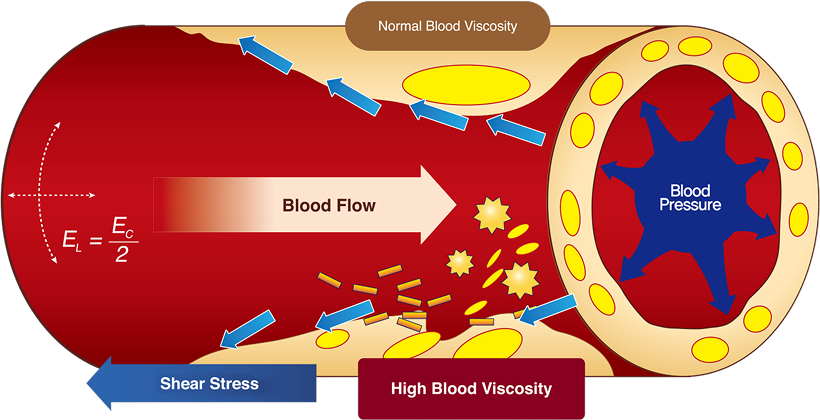
Blood Viscosity Test – Why is it necessary?

A blood viscosity test measures the thickness (stickiness) of blood under both systolic and diastolic conditions. Through this test,
it can help in treatment and prognosis prediction for patients with or suspected of having hyperviscosity syndrome, cardiovascular and cerebrovascular diseases, peripheral vascular diseases (myocardial infarction, stroke, hypertension, Alzheimer’s disease, vascular dementia, diabetic circulatory disorders, dyslipidemia, chronic obstructive pulmonary disease,
polycystic ovary syndrome, metabolic syndrome, etc.), as well as for the general public who may be at risk.
  • High Blood Viscosity
  • Abnormal Shear Stress
  • Endothelial Cell Damage
  • Causes Heart Disease and Stroke
blood viscosity
